-
Program:
Urbanism
-
Status:
Concept & Schematic Design
-
Photography:
Diego Velazco
-
Located near the coastal resort of Punta Negra, Agreste is a residential development that embraces community living rooted in nature, while enhancing the value of the region’s hilly geography and preserving its environmental and expressive qualities.
Agreste is conceived as a shared territory of encounter, where nature itself becomes the host: a natural district experienced collectively and intensified through the lived perception of an exceptional landscape. The project is situated between the lagoon and the sea, guided by the premise of making nature a home.
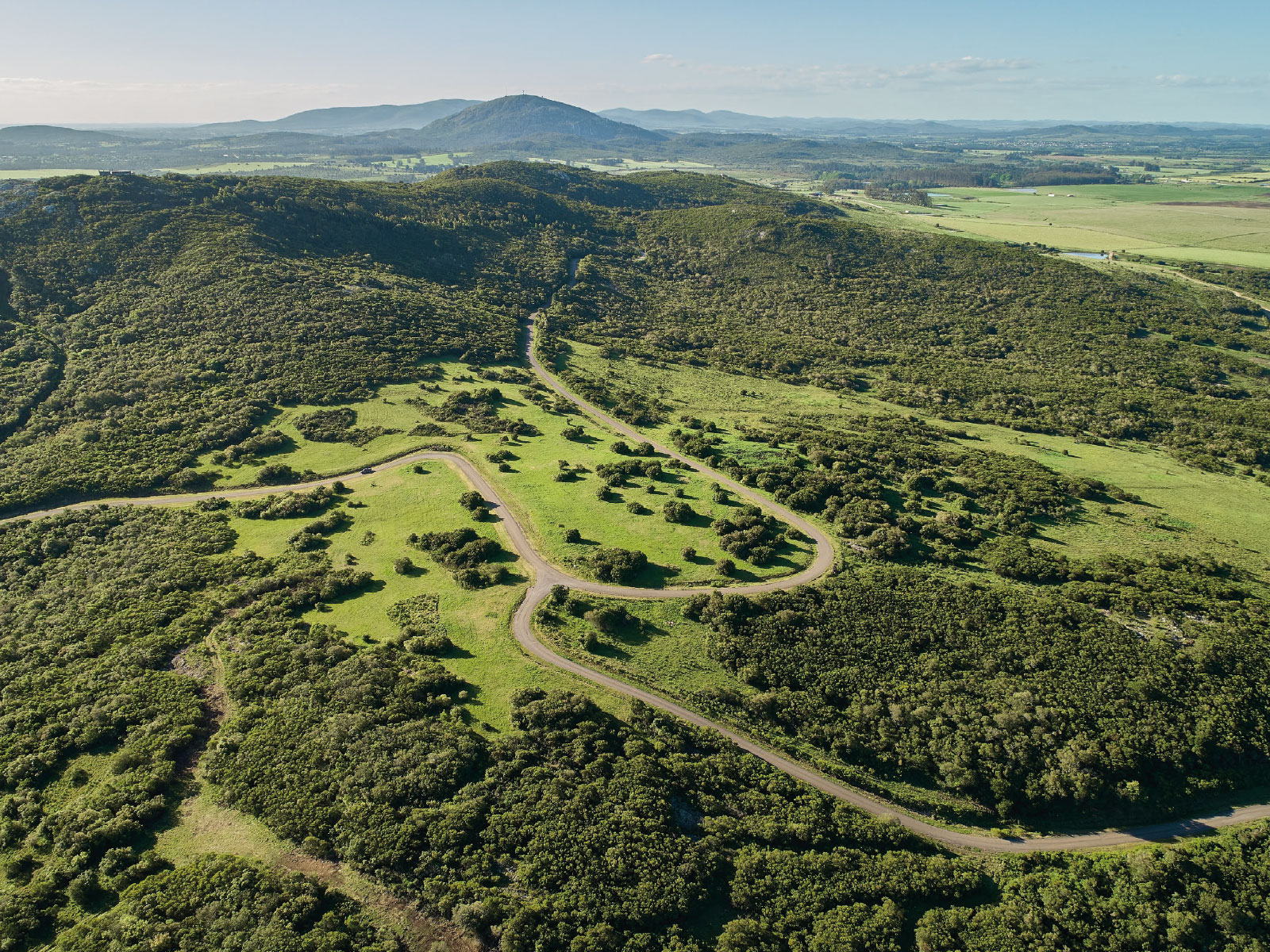
The proposal consists of a residential masterplan located on Cerro de las Espinas, in Maldonado. Access is provided from Route 10, continuing along Camino de los Arrayanes and Avenida Uruguay—a primary structuring corridor that organizes the site’s entrance and connects it to the regional road network.
The site’s strong landscape character is expressed through open grasslands, gentle topographic undulations, and selective forested masses that structure the territory both visually and environmentally. The elevated terrain allows for expansive views and establishes three dominant landscape references perceived from higher ground: the hill itself, the ocean, and the lagoon.
Residential construction is concentrated within defined building areas of approximately 750 m², plus dedicated parking zones, allowing the remaining portions of each plot—varying in size according to lot configuration—to remain untouched. This strategy responds to the intent of preserving the site’s essential character, respecting valuable vegetation and safeguarding long-range views from different elevations.
A central open area between blocks is intentionally left undeveloped, both to protect its natural qualities and to allow for the potential future incorporation of shared amenities. Designated green reserve areas function as collective spaces in direct contact with nature, while the open interstitial zones between limited intervention areas allow for transversal movement across the site, maintaining a continuous relationship with the surrounding landscape.
Within this framework, design quality, precise execution, and attention to detail emerge as defining attributes of the proposal—principles that are also reflected in the project’s visual identity, developed by the Studio.
Agreste’s urban design guidelines place nature at the core of the intervention. The project prioritizes the preservation of the natural habitat and deliberately subordinates human intervention to the multisensory prominence of the landscape, in line with the values and aspirations of its future residents.
The Entrance as a Territorial Threshold
The entrance design recognizes the landscape as a central component of the arrival experience, conceived not merely as a functional device but as a gradual transition between territorial scale and the interior realm of the development.
The main access is organized through a clear and controlled layout integrated into the existing topography, minimizing earthworks, preserving long views, and resolving vehicular access in a direct and legible manner. This approach ensures appropriate conditions of safety, control, and circulation flow.
A clear reference point is established along Avenida Uruguay without resorting to monumental gestures, favoring low-rise architecture with a strong connection to the ground—consistent with the rugged, natural character of the site.
The entrance ensemble comprises vehicular gates, a control booth, and perimeter enclosures that define the boundary between public space and the private domain of the development. Architectural elements are arranged in a fragmented, horizontal composition that follows the scale and rhythm of the landscape.
The material palette—gabions, wood, and metal planes—responds to a search for restraint and permanence, establishing a direct dialogue with the natural environment while offering a contemporary interpretation of the rural landscape.
Existing vegetation is preserved and incorporated as a natural framework for the entrance sequence, reinforcing a gradual and contained arrival. From an urban perspective, the access operates as a true threshold, introducing visitors to the logic of the masterplan and anticipating the project’s identity in continuity with the landscape.
Amenities Structuring Everyday Life
The amenities at Agreste form an integrated architectural system of collective spaces that reinforce the project’s identity, enhance quality of life, strengthen community bonds, and promote a way of living intrinsically linked to the landscape.
Through architecture of controlled scale, honest material expression, and careful integration with the environment, the development proposes a lifestyle in which well-being, nature, and social interaction are articulated in a balanced and contemporary manner.
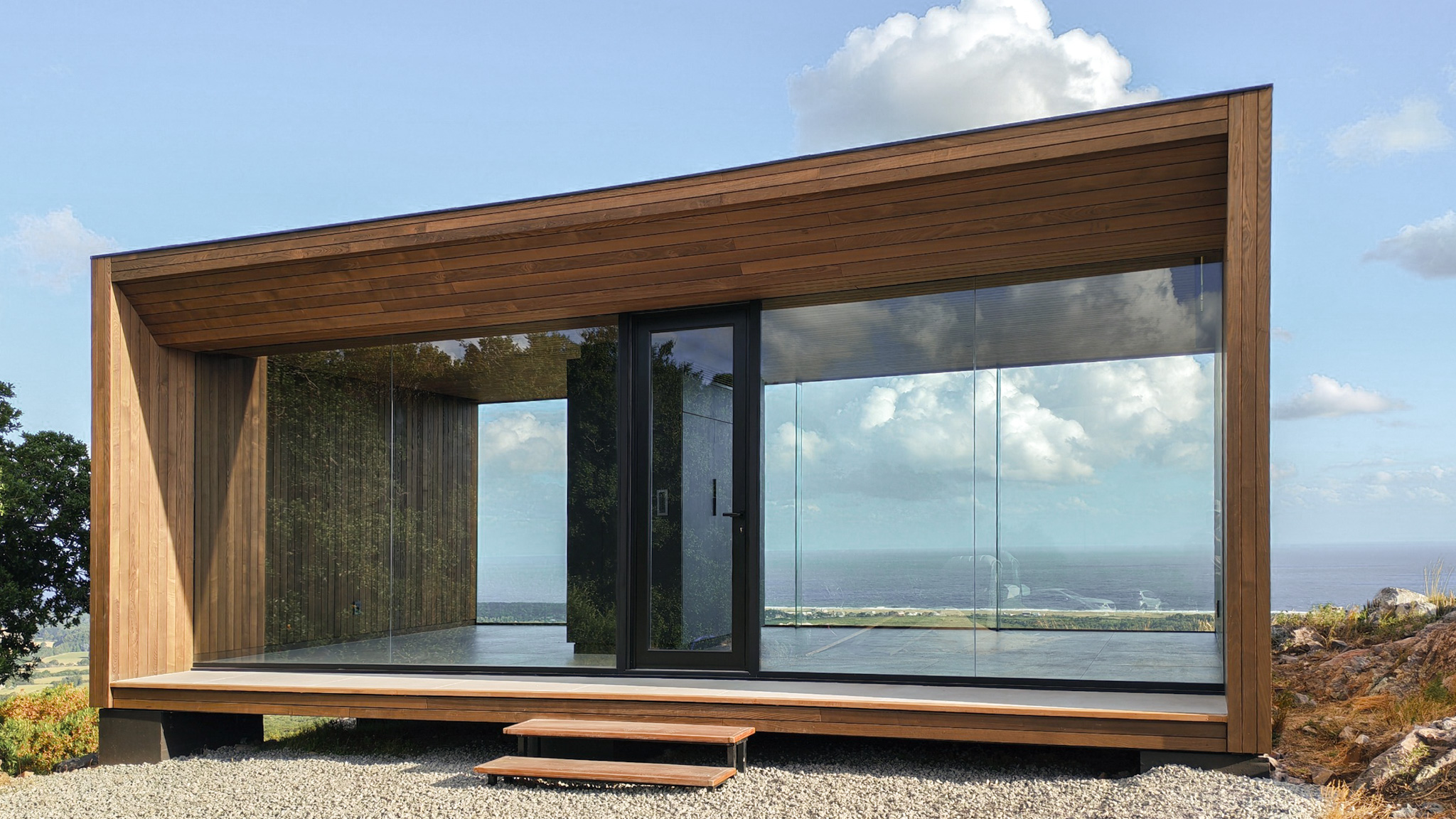
The gym, clubhouse, and stables are strategically distributed across the site, establishing clear relationships with topography, long-range views, and internal circulation. Together, they function as activity nodes capable of structuring uses, paths, and encounters—consolidating a development model that extends beyond conventional residential paradigms.
Clubhouse: The Social Core
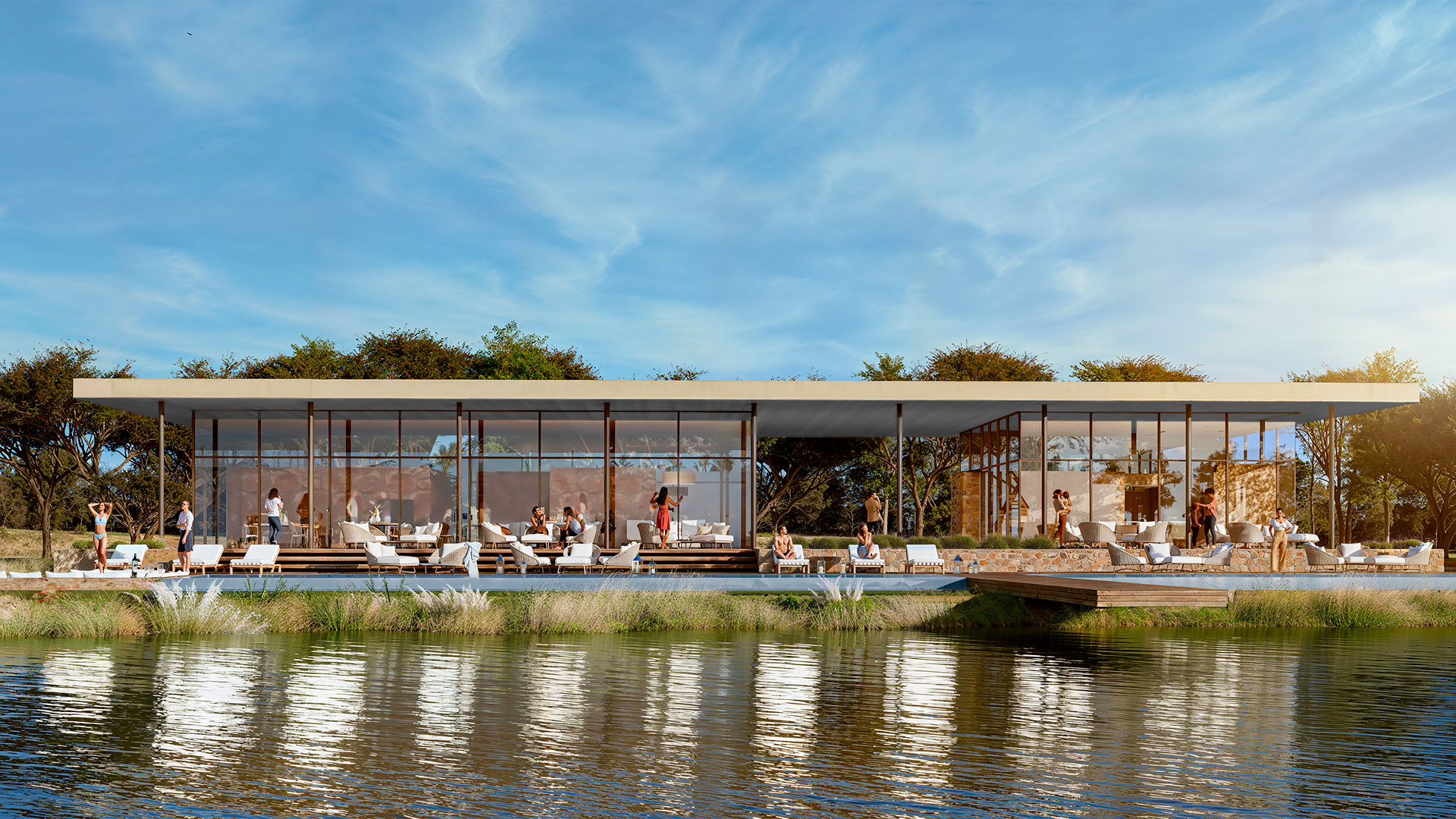
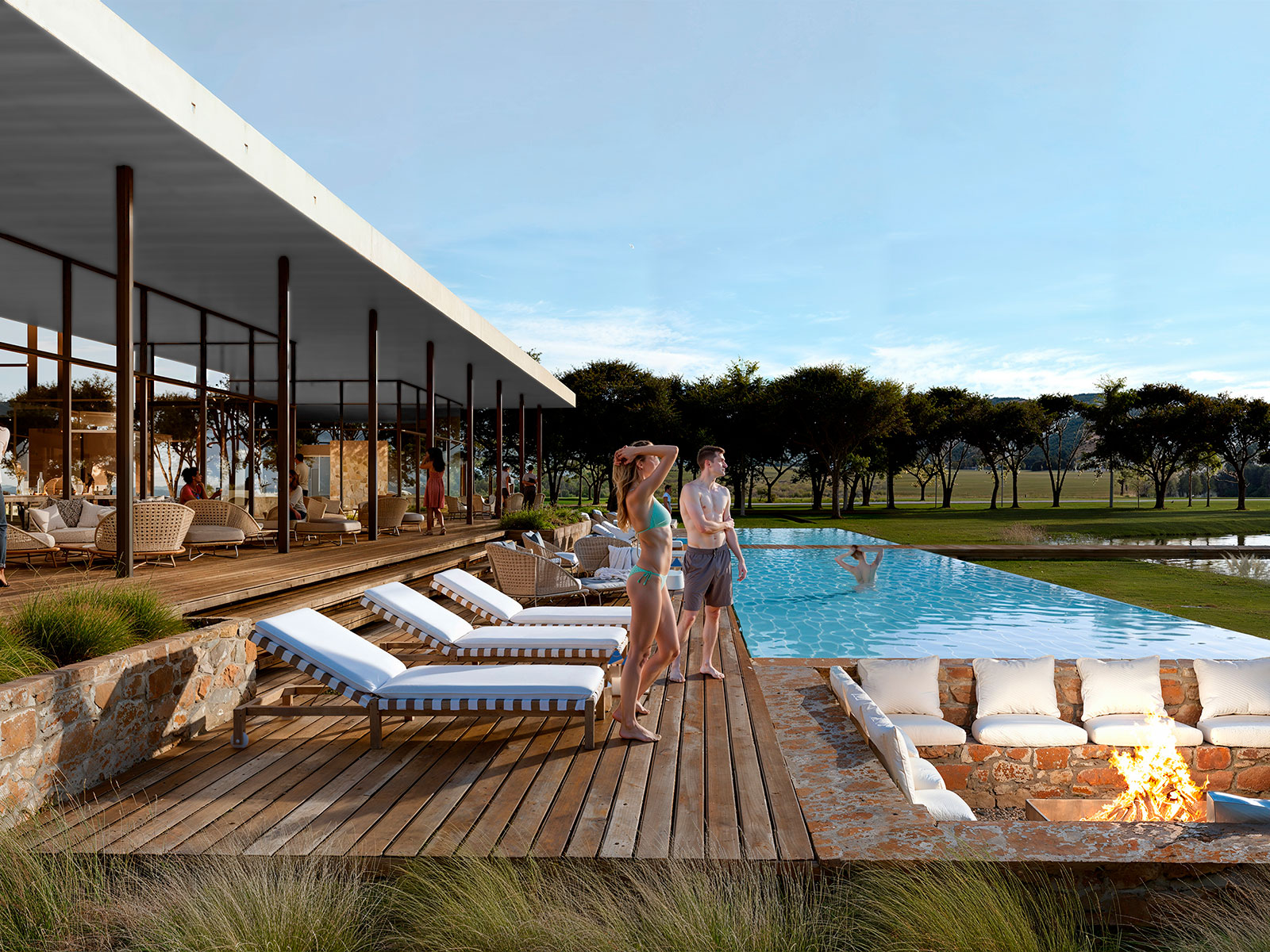
The clubhouse is conceived as the social heart of the development: a flexible, open space that brings together recreational and gastronomic activities while encouraging community interaction.
Its placement takes advantage of proximity to the water feature and surrounding green areas, generating a strong indoor–outdoor relationship. The architecture is articulated through low, horizontal volumes with expansive glazed surfaces and covered galleries that blur the boundary between building and landscape.
Interior spaces are organized in a fluid manner, allowing for multiple simultaneous uses and reinforcing the collective vocation of the ensemble. Noble, low-maintenance materials—such as stone, wood, and glass—contribute to a warm, contemporary expression in dialogue with the natural environment.
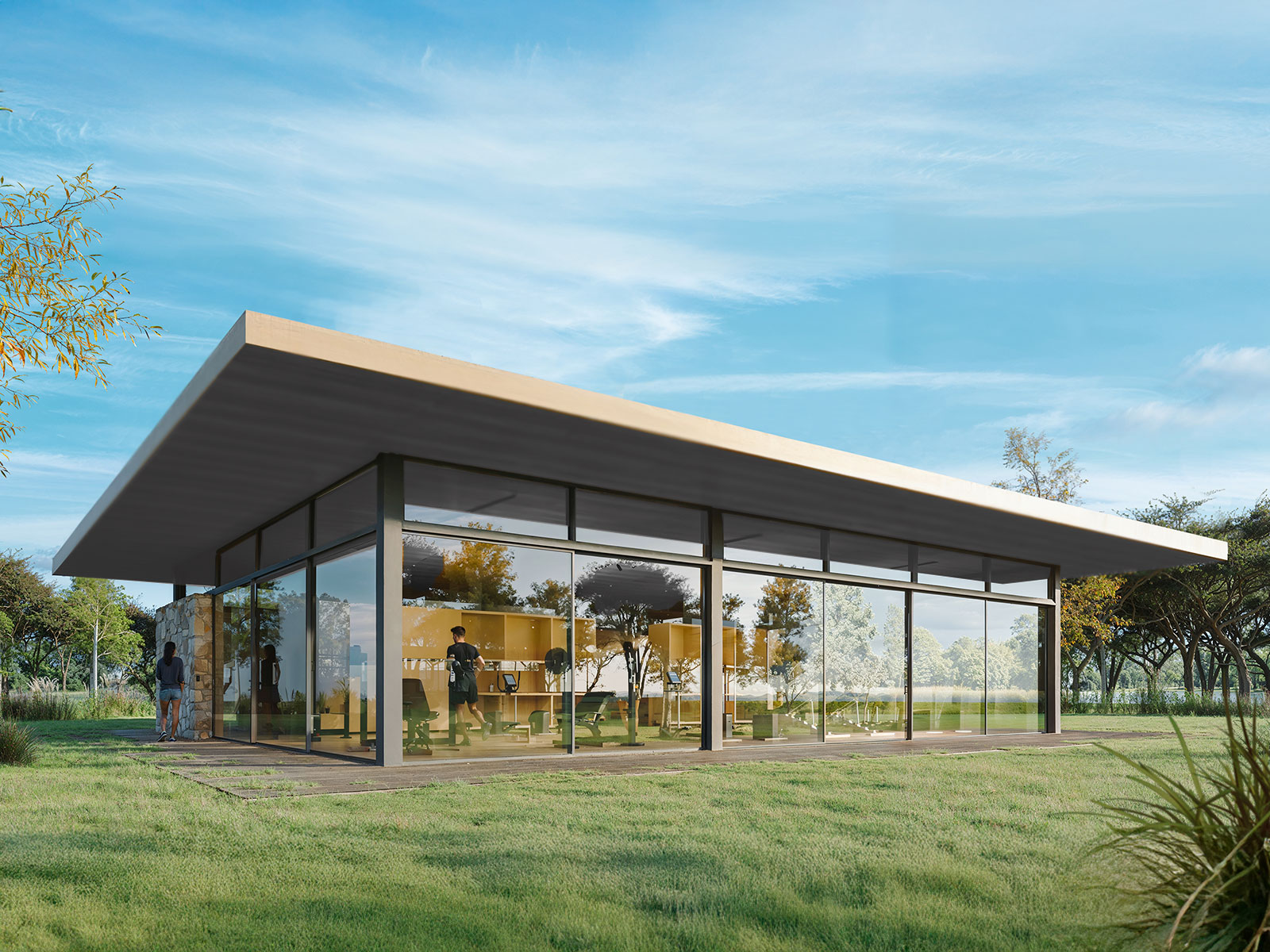
Gym: Well-Being in Direct Contact with Nature
The gym is conceived as a space dedicated to physical well-being and active living, fully integrated into the surrounding landscape and designed for year-round use.
Its siting prioritizes orientation and views, allowing sporting activity to take place in constant visual and spatial connection with the green environment. The plan clearly organizes training areas, services, and complementary spaces, promoting flexibility of use.
The architecture, defined by simple lines and restrained scale, relies on a sober material palette that reinforces the idea of a lightweight pavilion integrated into the terrain and the project’s network of open spaces.
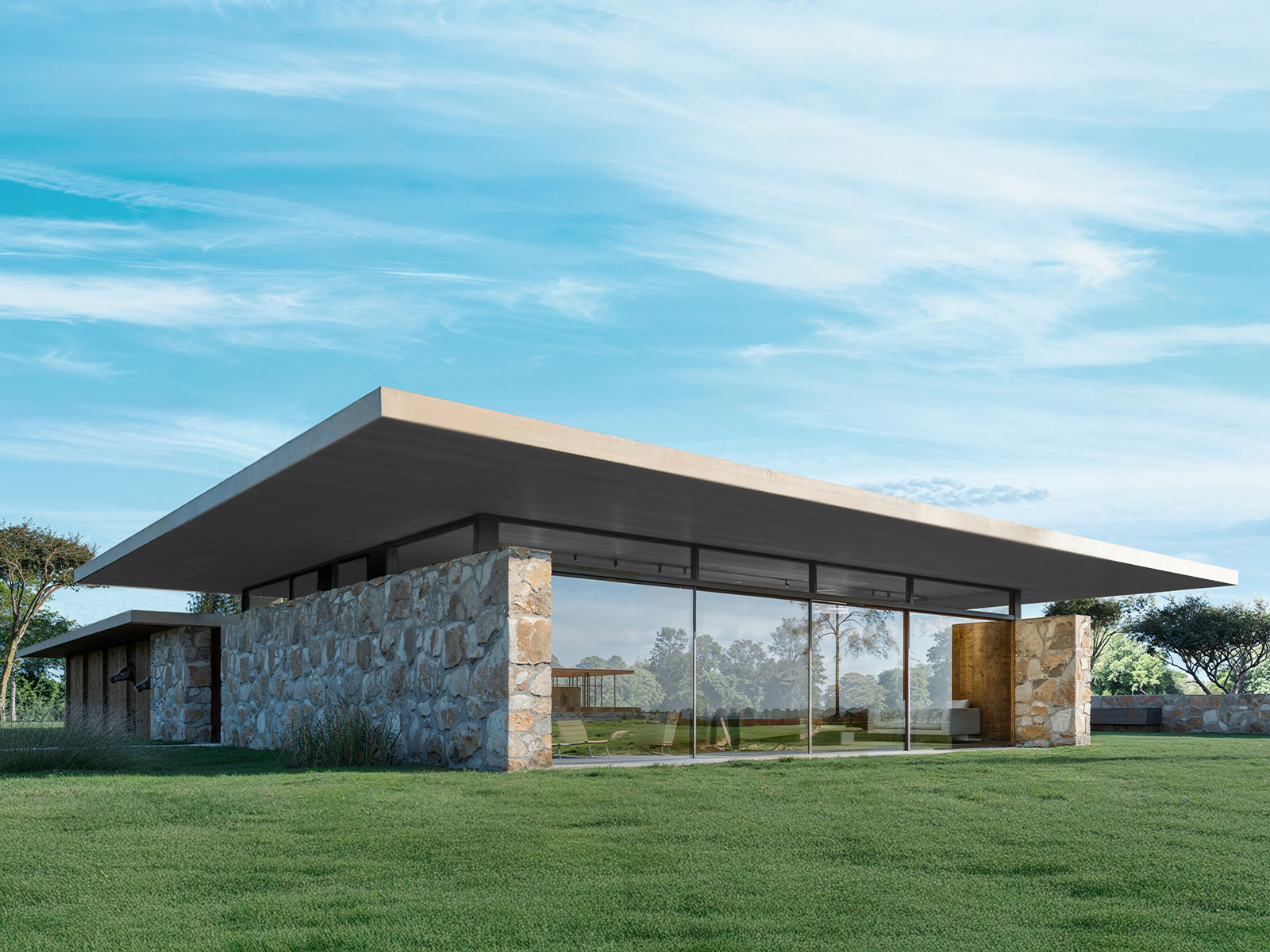
Stables: Rural Identity and Equestrian Tradition
The stables represent a key identity component of the project, linking Agreste to equestrian tradition and the site’s rural character. Their layout responds to clear functional criteria, ensuring appropriate relationships between stalls, service areas, circulation, and paddocks. Architecturally, the proposal favors an austere, robust expression, with low-rise volumes that follow the topography and integrate into the landscape through the use of stone, wood, and lightweight roofing systems.
Outdoor areas dedicated to animal care and handling complete the ensemble, reinforcing the reading of a productive, working landscape seamlessly integrated into the residential development.
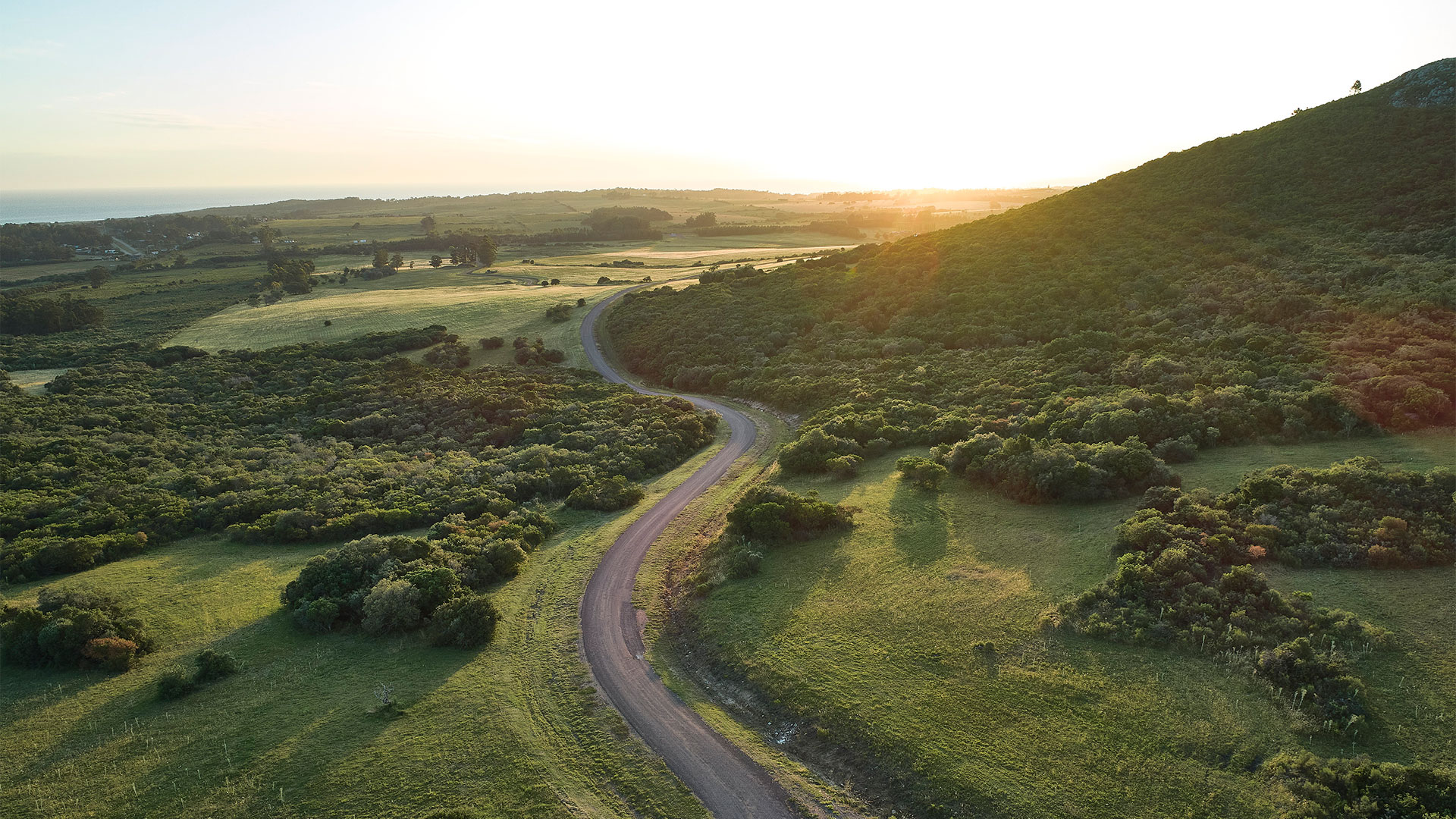
Making Nature a Home
Throughout the Agreste masterplan, the landscape plays a structuring and unifying role. Existing vegetation is preserved and enhanced, providing shade, visual continuity, and environmental coherence. Pedestrian and vehicular circulation is discreetly integrated, prioritizing gentle routes and a calm, deliberate pace of use.
Material and conceptual coherence across the amenities consolidates a shared identity, where each element maintains its functional specificity while remaining part of a cohesive whole—affirming a way of living that understands architecture as a support for landscape, community, and everyday life.